

 --
--

Woven Into Rome
The Story Of Singer Palace Hotel Roma
There are hotels that offer you a comfortable bed and a safe retreat during your travels, and then there are those that elevate that into a level of pure sentiment, making you feel as though you have stepped into an integral part of a place’s history. At Singer Palace Hotel Roma, I found myself in the latter.
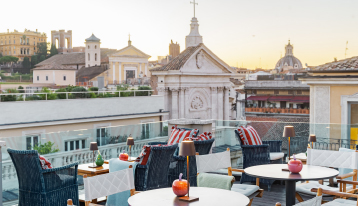
Located right in the heart of Rome, just a stone’s throw away from iconic sites like the Pantheon, Trevi Fountain, and Piazza Venezia, Singer Palace is perfectly positioned for experiencing the Eternal City.
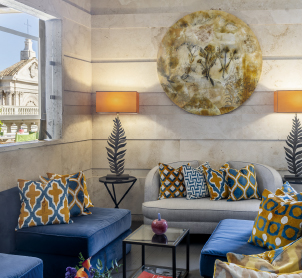
As soon as I stepped inside, what captured my attention first were the hotel’s interiors. Rich jewel tones, marble finishes, brass accents, and plush velvet furnishings gave the palace a lively character—bold yet refined, striking a beautiful balance between historic grandeur and contemporary grace. More than its address, the hotel’s appeal lies in the fact that it is part of the story of Rome, housed in a 1930s building that once served as the Italian headquarters of a world-renowned sewing machine company.
The moment I learned this, I began noticing the details all around me differently. To me, the Singer sewing machines displayed throughout the Palace were a metaphor for its emphasis on craftsmanship and quality.
Immediately, I got the sense that the hotel held on to its rich past with passion and loyalty, integrating it into Rome’s present and future in the most delicate way.
A PALACE WITH A STORY TO TELL
The Singer name first became associated with innovation and craftsmanship through the sewing machines that made it a household name all around the world. In Rome, that legacy found a home in Singer Palace, built in 1930 as the Singer company’s Italian base.
Today, the building has been transformed into a boutique hotel, but traces of its former life remain. Singer sewing machines form part of the interior design, offering a subtle reminder of the energy of creativity and industry that once flowed through their halls.
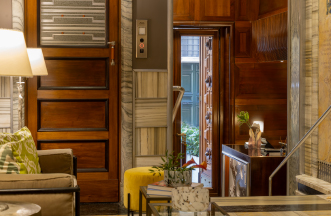
The architecture itself is equally fascinating. Designed by architect Mario Loreti, the building’s original character is ushered into the present time through details that blend the classic and the modern. Vibrant blocks of color shine against antique elements like hardwood and patterned floors. What caught my attention early in my stay was the hotel’s suspended staircase, with self-supporting Arabescato Corchia marble steps that define what refined luxury truly is.
Walking through Singer Palace, I kept thinking about the idea of transformation, and how it is necessary for longevity. A building that was created for an industrial company has been refreshed to become a sanctuary for those seeking out the Roman experience. It has survived for this long due to the way it has adapted to the times, yet its identity remains intact. The hotel does not attempt to erase its history—instead, it allows the old and the new to sustain its story.
THE ART OF FEELING AT HOME
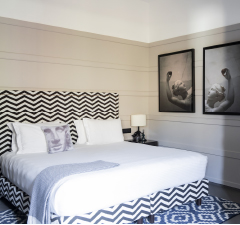
With 29 rooms and suites, Singer Palace has the intimacy of a boutique residence rather than the scale of a grand city hotel. Room interiors reflect contemporary Italian design: elegant furnishings, marble bathrooms, velvet seating, and carefully curated art and objects.
As a traveler, I appreciate it when accommodations have a residential quality to their spaces. It makes me feel as though my needs as a guest were deeply considered, and it makes not just the hotel but the whole city feel like home.
That initial reaction felt even more nuanced after I learned that the Singer Palace is a family-managed hotel. My stay gave me the opportunity to meet one of the owners, Rosa Visocchi. Her family has spent generations in hospitality, and their expertise reflects in every little detail—from the way the rooms are arranged to the kind and accommodating demeanor of the hotel staff. Alongside Marco and Michela, Rosa represents the third generation managing the property.
ROME, FROM ABOVE
After spending hours walking to and from tourist spots, food- and cafe-crawling, and sightseeing, I would wind up in the higher floors of the Palace.
Le Terrazze, the rooftop restaurant of the Singer Palace, easily became one of my favorite places not only in Rome but in all of Italy. With elegant outdoor seating and decor that mirrored the lush greenery that framed it, the restaurant offers sweeping views across Rome’s rooftops and lively streets below.
Breakfast quickly became one of my favorite rituals, with an abundant spread of fresh fruit, cheeses, cured meats and pastries. For dinner, I enjoyed both Roman classics and seasonal Mediterranean flavors, from ricotta and spinach ravioli and Amalfi lemon risotto to timeless Italian staples like carbonara and cacio e pepe. The food at Le Terrazze certainly made it easier to slow down and enjoy Rome even more—I lingered over the mesmerizing view as I savored every flavor on my plate.
In the late evenings, there was nothing I looked forward to more than spending time at Jim’s Rooftop Cocktail Bar. I enjoyed my cocktails with live music, taking in the view of the illuminated domes and buildings across the skyline.
I was especially intrigued to learn about the partnership between Jim’s Bar and Borsalino, the historic Italian hatmaker. Interestingly, Singer sewing machines were also used at Borsalino’s factory in Alessandria to create their now world-renowned hats. As Singer Palace Hotel Roma’s CEO Michela Mola Visocchi puts it, “Some collaborations stem from a strategy, while others simply seem destined to come together.”
Within a 24-month project, Borsalino has designed the rooftop bar’s spaces, highlighting its Italian heritage through carefully considered design that’s set against the backdrop of Via del Corso and Quirinal Hill.
A NEW CHAPTER FOR AN OLD ROME
Before I left, I found myself taking in again the elements that I was first attracted to here—the Art Deco-inspired details that made the Palace so quintessentially Roman.
But the Singer Palace was memorable not only for its vibrant, thoughtfully designed interiors, the comfort and luxury of its rooms, and the quality of its food and beverage offerings, but also for something deeper. It stood out because it was big enough—not in size but in emotional capacity—to hold both its past and its present together.
I feel the same about the city of Rome, in general. Rome has this magical capacity to preserve and protect its ancient, world-celebrated history, all while moving through the cultures of the present day.
As a traveler, and as a person, I feel inspired by this. Because of the hotel and the very city it belongs to, I felt a calling to embrace my abundance so that my history and present story can coexist. It made perfect sense why the hotel felt so much like home—the Visocchi family’s care for the Singer Palace across generations is something you feel in every corner of the place.
I left Rome carrying not only souvenirs and memories, but a whole new outlook on life.
