

 --
--

Howdy, Houston!
Mighty Glad To Be Here
Who says you can’t take it with you? Tell that to Wilson Baker, the manufacturer (and patentholder) of a money-laced coffin on display at the National Museum of Funeral History in Houston, Texas. The Lucite-encased legal tender—one-, five- and ten-dollar bills (with a coupla’ 50’s thrown into the mix), along with quarters, half-dollars, and silver dollars—sparkles with the gleam of “new money,” dazzling and crisp. This cash cache comprises all uncirculated coin and bills, toting up to a mere $643.00; at one point, though, it held an even thousand bucks. However, the interior panel, replete with the balance, was stolen! Talk about grave-robbers!
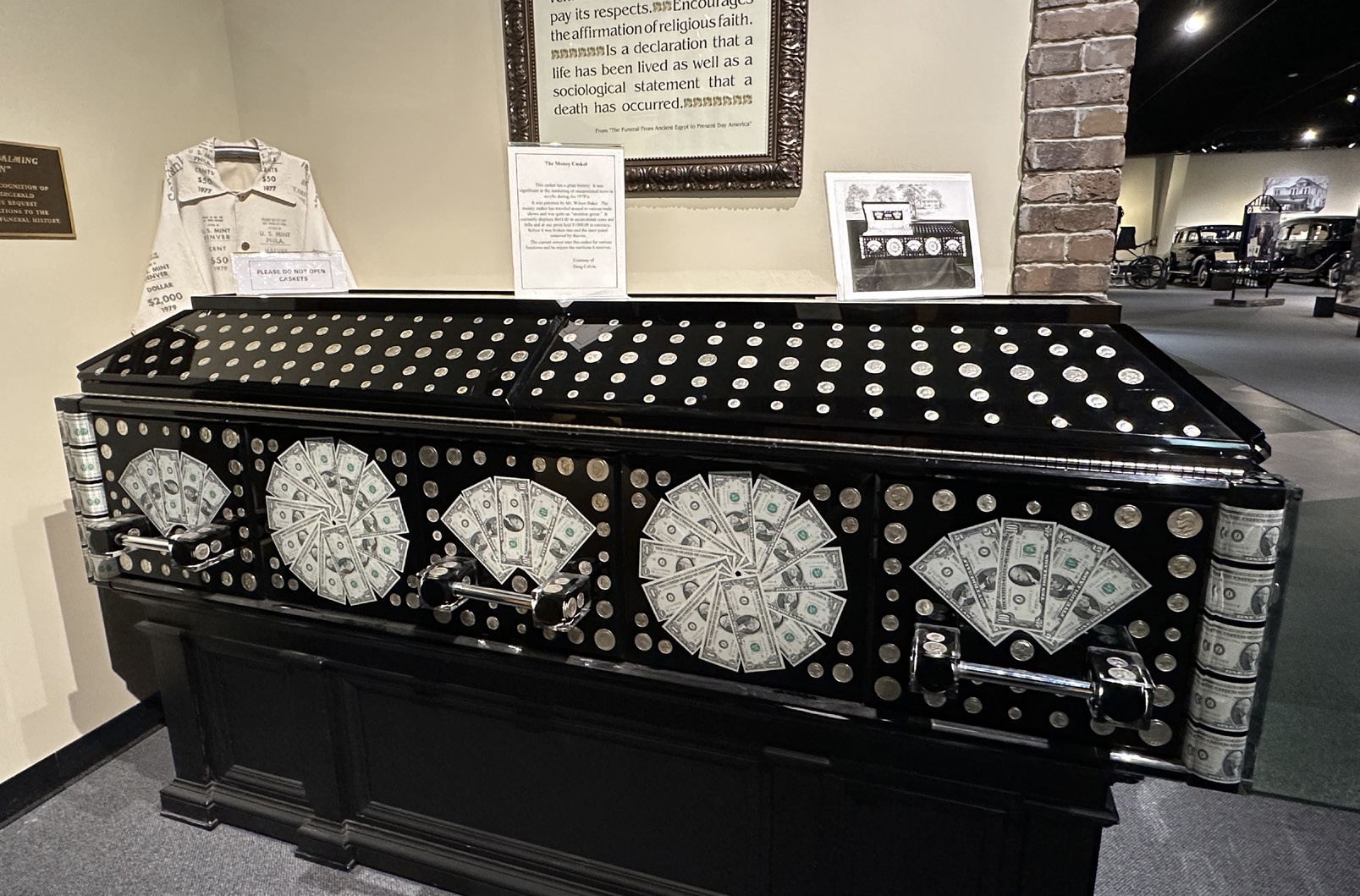
The “Money Casket,” as it is known, is but one artifact on display in this fascinating museum, dedicated to collecting artifacts relating to funerals and preserving the history of the mortuary profession. At the same time, the institution seeks to educate the public about funeral customs and practices worldwide, dating back to ancient Egypt. Founded in 1992, this rich repository was but a germinating idea in Robert L. Waltrip’s mind for some 25 years, and ultimately, he was able to make that dream blossom. (The local Waltrip family was, not surprisingly, in the funeral business, and Robert ultimately expanded that company to become the largest operator of funeral homes, cemeteries, crematories, and other funeral-related operations in North America.)
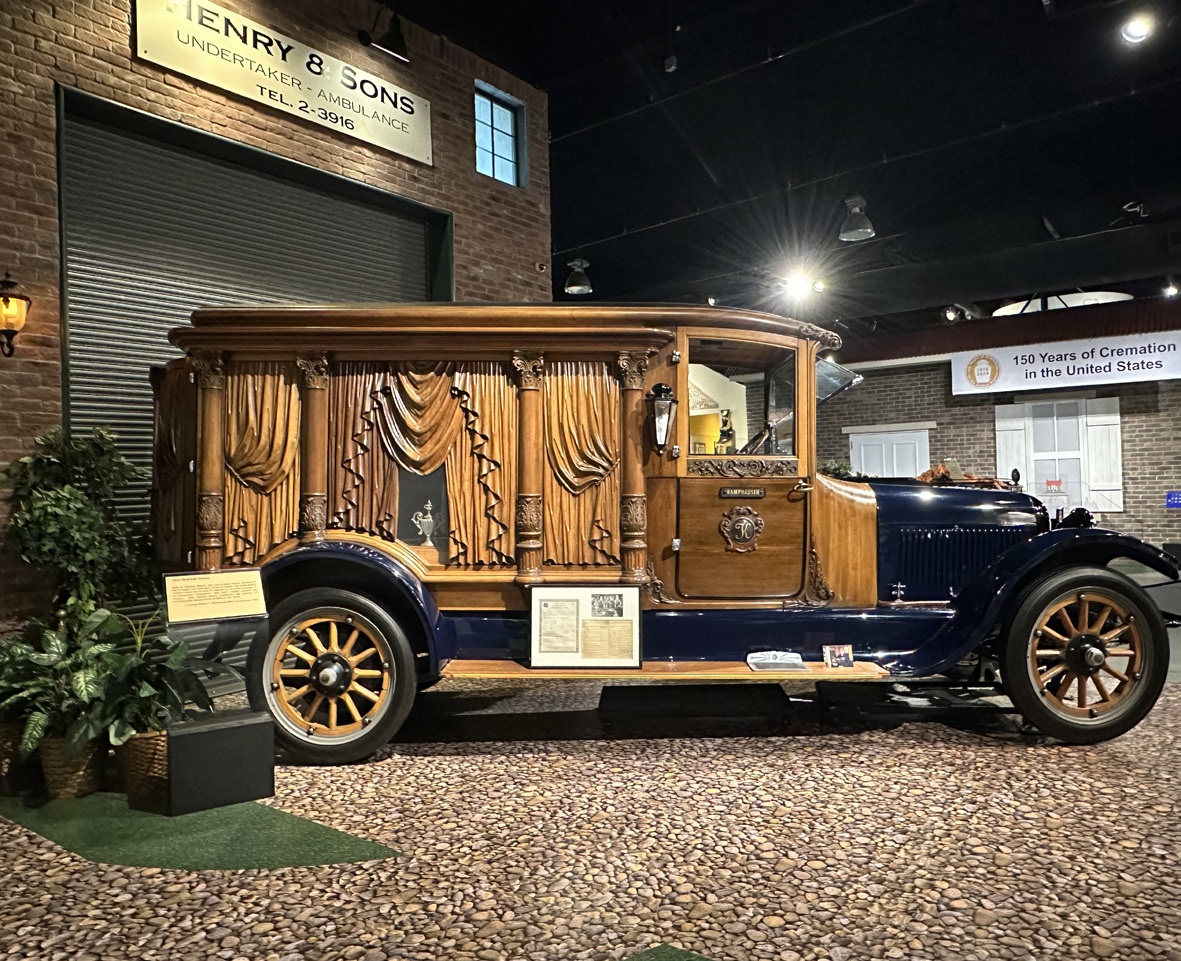
It is an eclectic and fascinating collection for all things funeral-related—including displays that bring to life (no joke intended) the cultural rites of diverse religions and peoples throughout history; an exhibit about the funeral rites of Popes and of American presidents (including Abraham Lincoln’s death mask); and stately, often imperial-looking, vintage hearses: Among them, a majestic 1938 Henney-Package Flower Car; a 1920’s Rockfalls Hearse, hand-carved from six types of wood, weighing 4,600 pounds, and stretching 19 feet long (!); and almost playful, whimsical coffins from African artist Kane Quaye, who fashions his artwork for the final “transition” to another place. His inventive casket designs include a KLM airliner, a Mercedes-Benz automobile, a leopard, a chicken, an eagle, and even a lobster. Not only can you take it with you, but you can get there (wherever there is) in enviable style.
This intriguing museum was but one cultural stop in my quest to discover the “hidden” Houston, a city of two-million-plus; if you count the Greater Metropolitan Area, bump that number up to seven million. Add to that native population, seven million annual tourist visits. To keep those visitors busy, Houston serves up a smorgasbord of 19 different museums in the Museum District alone, making it the fourth-largest museum locality in the country, and NB: 11 of these cultural institutions offer free admission all the time.
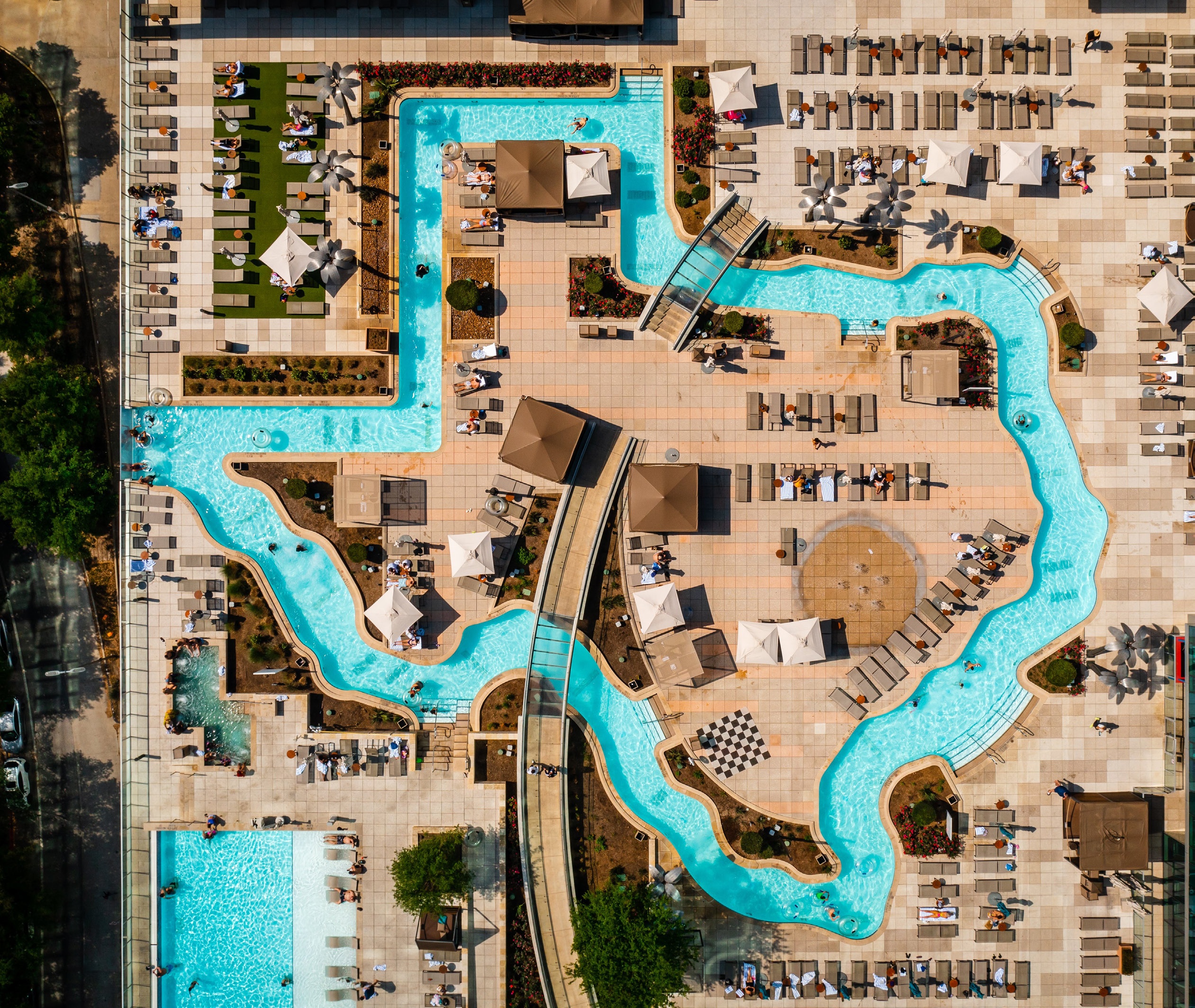
As you likely already know, everything in Texas is larger than life. Take the “Lazy River” swimming pool at the downtown Marriott Marquis Hotel: it is built in the shape of the state of Texas—but, of course, it is—and measures a perimeter of 510 feet. You can swim all around the state, from Brownsville to Laredo, then on to El Paso, around the Panhandle, past Wichita Falls, Beaumont, Galveston, and Corpus Christi, ultimately landing you right back where you started.
More Captivating Museums
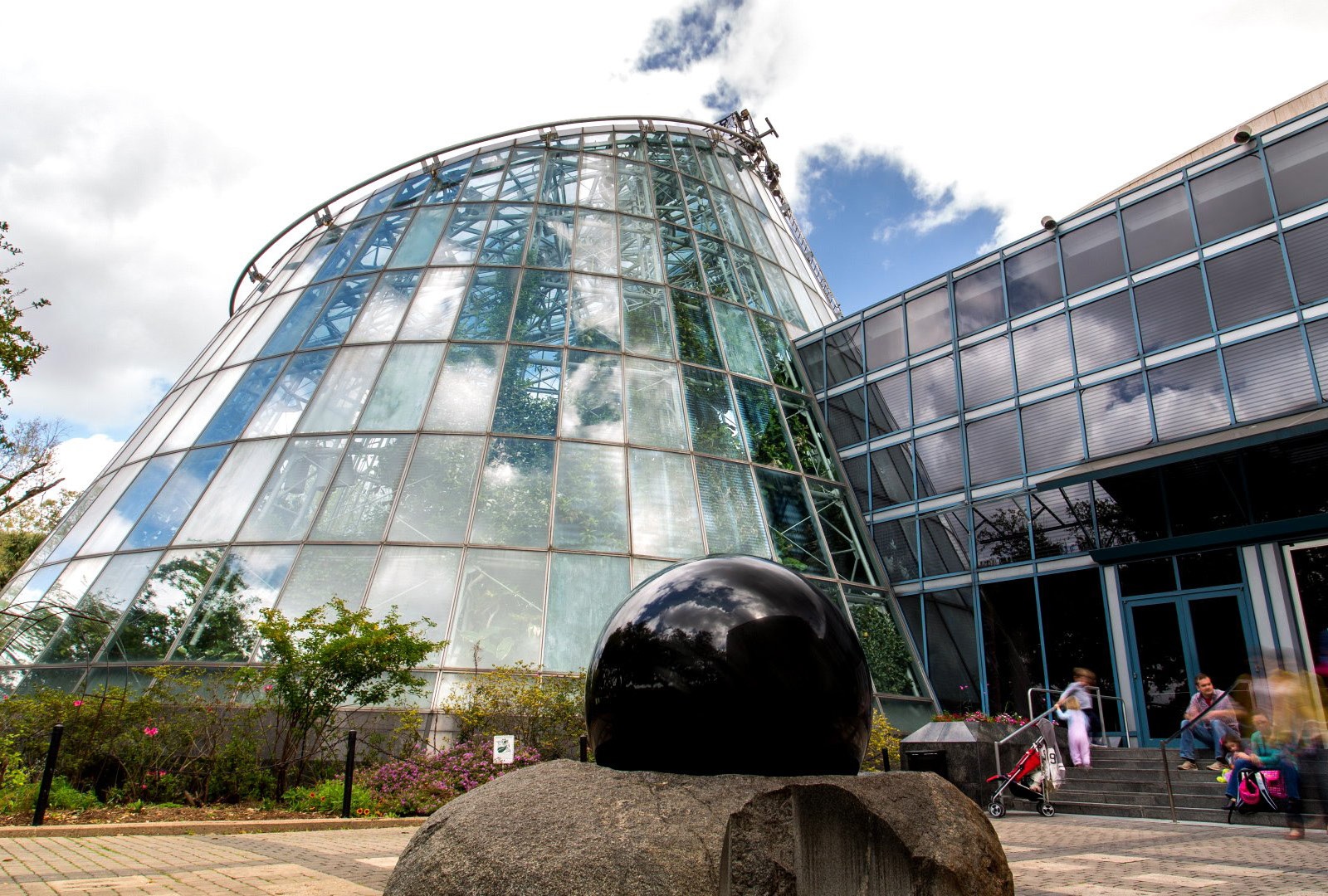
As if I weren’t gobsmacked enough already, by the breadth and scope of Houston, I spent a morning at the Houston Museum of Natural Science, specifically to experience the Cockrell Butterfly Center, where a permanent, living exhibit features a stunning butterfly “arboretum” of hundreds of “specimens.” Flitting around in a natural-looking and -feeling rainforest setting, the butterflies land everywhere—get those cell phone cameras ready! The central conservatory is a dramatic, three-story, glass cone filled with tropical plants and a 50-foot waterfall. The website entices: “During a typical visit, one can expect to see 50 to 60 different species of the world’s largest and most colorful butterfly species, flying through the balmy air, hovering over flowers or sipping fruit juice – and occasionally, landing on visitors!” I was as delighted as the children. It is simply magical.
For more adult fare, I would encourage a trip to the Menil Collection, one of the most important privately assembled collections of the 20th century, featuring 15,000 paintings, sculptures, prints, drawings, photographs, and rare books. It’s spread out over a bucolic campus, with gray-toned, low-level buildings—all light and airy—so that you have the feel of entering private homes. The Cy Twombly Gallery is a must, an intimate space highlighting the master’s works.
From Menil, it’s a short hop to the spiritual Rothko Chapel, the only ecumenical center of its kind in the world. It’s a chapel, a museum, an artwork, a forum, an architectural masterpiece. Another must-see. At the Museum of Fine Arts Houston, I happened to catch an extraordinary exhibit by the renowned A.A. Murakami team, who created an immersive, sensory installation of misty clouds, foggy rings, airy bubbles, and glowing plasma tubular forms…all ephemeral and diaphanous. Watching them swirl, fleetingly fuse, and then magically dissolve is like plunging into a celestial dreamscape, floating inside a cloak of clouds. Art and science have never been married so well; the duo call their masterful work “ephemeral tech.”
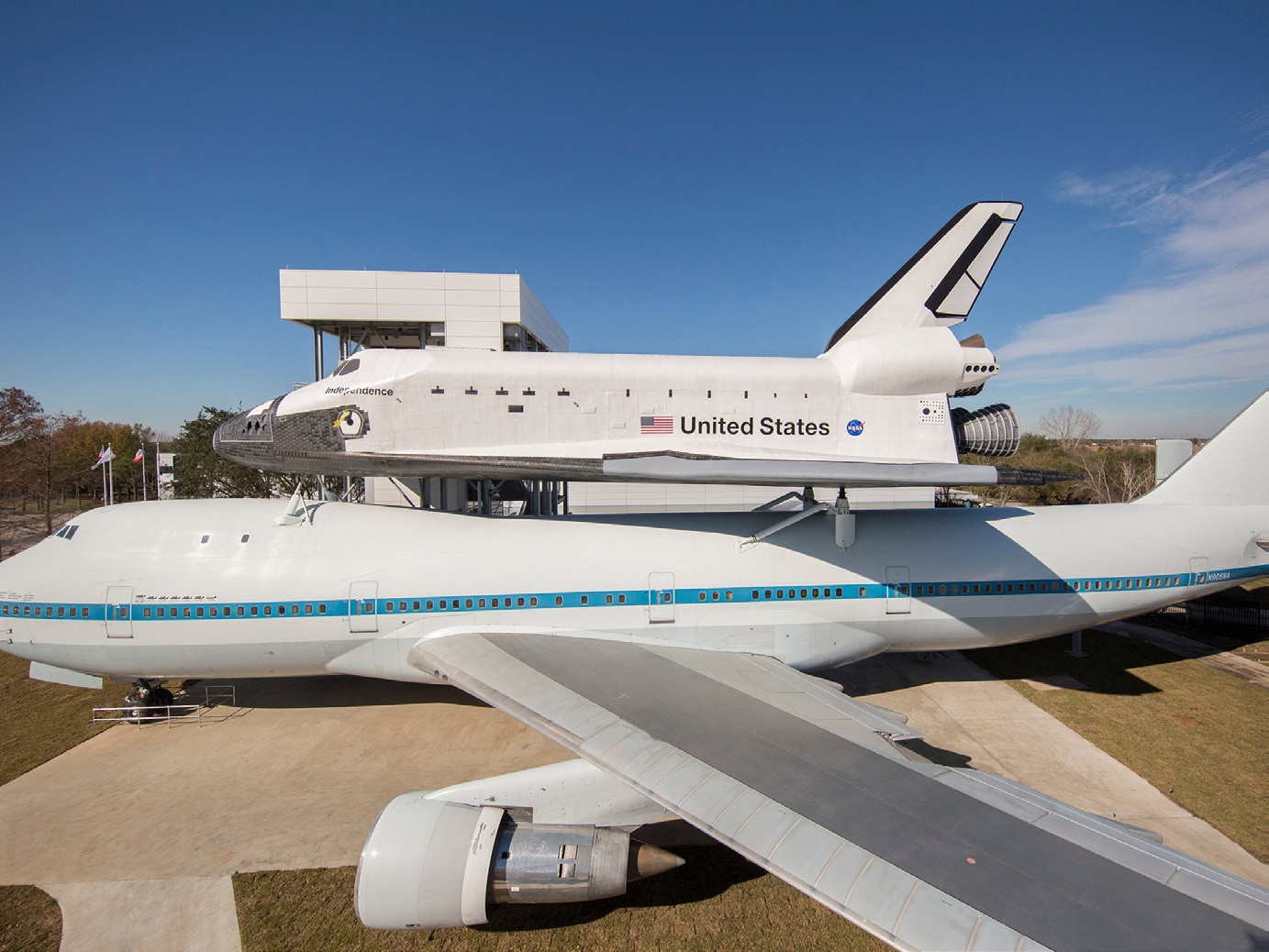
On yet another awe-filled day, I headed out to Space Center Houston, the official visitor center of NASA Johnson Space Center, and was once again bowled over by being “in the room where it happened,” as the cast rap-sings in the blockbuster musical “Hamilton.” I strongly advise springing for the VIP tour, which allows you to see much more than on the basic tour—you can even try on the space gloves that the astronauts wore. You’ll gape at the pageantry and pictures that line the exhibits and back offices and you’ll also be able to climb into a space capsule. It is truly thrilling to look at the rockets, the launchers, and, well, history. You’ll come away with more trivia data regarding the shuttles: There are 250 miles of wiring on a typical shuttle; an average shuttle has some 23,000 tiles on it, and putting them together is like doing the world’s most vexing jigsaw puzzle; and that it took three space shuttles to build the space station. You will come away thinking, “Houston, we don’t have a problem.” And if you need a little refreshment while there, stop into the restaurant and coffee shop, aptly named, “Grounds Control Coffee Bar.”
Dining Delights
Lest it appear that all I did was hopscotch from museum to museum, I quickly must laud the gustatory offerings of Houston. Here are a few highlights:
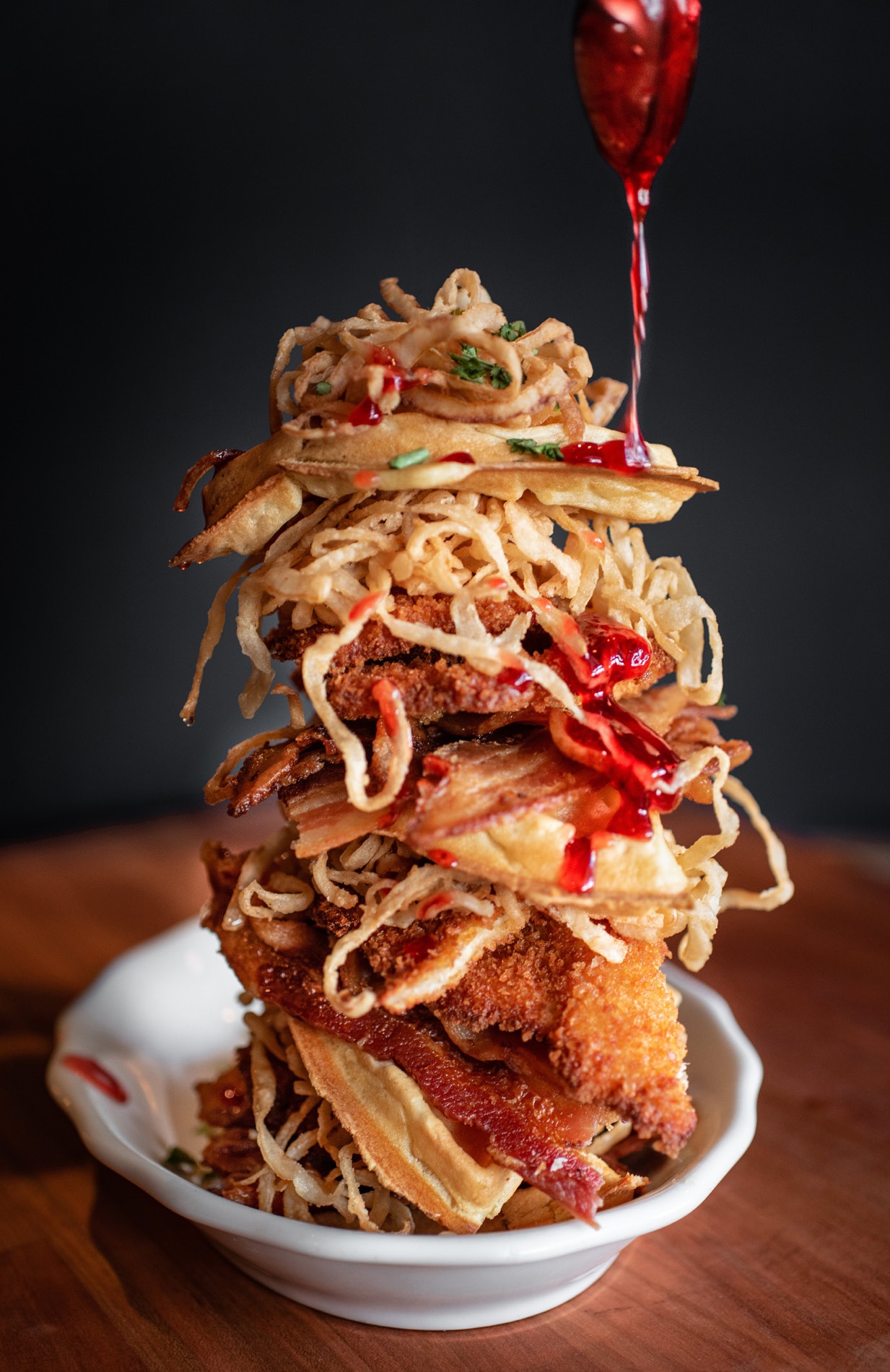
Navy Blue is a modern American seafood concept by chef Aaron Bludorn, who worked under Daniel Boulud in New York, where he earned New York’s Rising Star Community Chef Award. The flavors of my flaming dessert are still etched in my taste buds. While at the Museum of Fine Arts Houston, dine at the in-house “commissary,” Le Jardinier, helmed by Michelin-starred chef Alain Verzeroli. The restaurant offers up tasty luncheons of two courses for a very reasonable $45. In sharp contrast to my sedate, quiet lunch, for dinner, I opted for Nancy’s Hustle, a name that says it all. It’s a happening, lively place, on Houston’s east side, with an eclectic menu, guaranteed to please anyhow. I especially liked my duck dumplings with duck fat chili crisp, fermented mushroom beurre blanc. Another one of Chef Bludorn’s eateries, Perseid, was located in my hotel, the relatively new St. Augustine, and I could not leave without sampling more of his alchemy; I finished off my meal with beignets and strawberries, accented by black pepper (!) and vanilla pastry cream. Ooh-la-la.
Another outstanding meal was served up at Late August, conducted under the joint whisks of chefs Chris Williams and Sergio Hidalgo. Start your experience with the famous south-of-the-border mojito, with toasted coconut—a drink that was as gorgeous to look at as it was tasty and heady. I followed it with pan-seared chicken, charred tri-color carrots, coconut yuzu mole, and pecan crumble. I must mention that my last meal—not far from the Museum of Funeral History—was at another Houston institution, the New York-style deli, Kenny & Ziggy’s, where portions are Texas-size (a hamburger is approximately 7” tall). The eatery’s logo is: We schlep nationwide. Menu listings will tickle your brain, with entries like K & Z’s No-Kvetch Coffee and Mile High Key Lime Pie.
Caricatures grace the wall, alongside photos of famous diners who have visited. Underneath a headshot of Sean Connery, attired in his James Bond finery, the caption reads: “I’ll take my egg cream shaken, not stirred.”
Comfortable, Classic, And Cool Stays
I divided my time between two very different hotels, each with a distinctive profile.
La Colombe d’Or oozes old-world charm, supported by modern amenities (including a black washcloth for make-up removal, always appreciated). Named for the renowned French hotel (home to Picasso’s favored watering hole), the property is a landmark of artful design and revered history. One of the last Montrose Avenue estates, the historic Fondren Mansion manse was constructed in 1923, as a private residence for the founder of Humble Oil. Today, the original structure stands proudly as the centerpiece of an expansion that includes a more modern high-rise, and a complex of suite (and sweet) lodgings. An interesting collection of 425 pieces of original artwork accent the walls, while the centerpiece of the lobby is a majestic baby grand piano. Little “comfy” touches abound, including an in-room bottle of The Botanist Islay dry gin accompanied by Fever-Tree Premium Tonic Water.
The Hotel Saint Augustine (71 rooms) is relatively new, from Bunkhouse Hotels, known for its iconoclastic properties, and its reputation for bringing the guest more than a good night’s sleep. Design matters here: Robes are not standard-issue, white terry; they are cotton kimonos, each a rainbow of geometric shapes, a garment that Jacob, with his coat of many colors, would covet. Glasses at the “watering station” in your room are not merely clear highball tumblers, but rather a set of trendy Finesse Rock and Pop whisky goblets, in bold colors. Room toiletries are from the premium brand Klur, featuring its Aura Remedy body lotion.
I had a grand time in Houston and it only underscored that I must return from more “grand” things—including the Houston Grand Opera, the Houston Ballet, the Houston Symphony, and theatre. In addition, more museums are beckoning to me—the Health Museum, the Holocaust Museum, the Czech Cultural Center, Houston Center for Contemporary Craft, the Asia Society Texas Center—and dare I say, I want to hop over to sister city, Galveston? I will be back, to quote you-know-whom.
Photos courtesy of Houston First Corporation and the National Museum of Funeral History
