





Consuelo Vanderbilt Costin
Reimagining An American Legacy For A New Generation

For Consuelo Vanderbilt Costin, legacy is not something to be admired from a distance. It is something to be put to work.
The entrepreneur, singer-songwriter, founder of SohoMuse and founder of House of Vanderbilt has spent much of her career at the intersection of culture, creativity and commerce. Now, through a growing series of speaking engagements and public programs, she is bringing that message to a new audience: that heritage matters most when it is used as a springboard for action, innovation and opportunity.
It is a fitting chapter for a woman whose name carries unmistakable historical weight, but whose work is focused squarely on the future. Vanderbilt Costin understands the fascination that surrounds the Vanderbilt legacy, but she also knows the danger of allowing history to become decorative. Her current mission is not to preserve a family name behind glass. It is to place that name back into active conversation with the worlds of entrepreneurship, education, philanthropy and culture.
That message has shaped her recent public engagements. On March 5, 2026, Vanderbilt Costin brought her leadership platform to Miami, where she helped launch the Consuelo Vanderbilt Costin Girls Leadership Outreach Program at B. Wright Leadership Academy, a yearlong initiative designed to expose students to mentorship, confidence-building, communication skills, wellness, service and real-world leadership experiences. The program reflected one of the clearest expressions of her current work: using access, history and professional networks not as symbols of privilege, but as tools that can be shared with a rising generation.
In Miami, Vanderbilt Costin spoke with students about confidence, character and presence, connecting the values behind SohoMuse and House of Vanderbilt to the everyday skills young women need to be heard, seen and prepared for opportunity. The engagement also included a visit to the African Heritage Cultural Arts Center, where the conversation around etiquette and leadership broadened into a larger discussion of cultural identity, self-possession and possibility. From there, the students participated in a healthy cooking class at The Real Food Academy, turning the day into a hands-on experience that blended mentorship, wellness and community.
Her most recent appearance in Chicago built on that momentum. During a multi-part program held May 5-6 in collaboration with Columbia College Chicago, Vanderbilt Costin returned the Vanderbilt name to a city with deep ties to American industry, architecture, transportation and reinvention. The visit brought together legacy, education and cultural institutions in a setting that reflected both the weight of history and the urgency of the future. Taken together, Miami and Chicago illustrate the arc of Vanderbilt Costin’s current public work: one engagement rooted in girls’ leadership and mentorship, the other in heritage, entrepreneurship and culture, both connected by a belief that legacy matters most when it is put into motion.
That belief sits at the heart of House of Vanderbilt, the modern platform she founded to explore the intersection of family heritage, business, philanthropy, media and cultural influence. It is a contemporary answer to a historic question: What does a great American legacy become when it is no longer confined to the past?

For Vanderbilt Costin, the answer is not nostalgia. It is relevance. The renewed fascination with the Gilded Age has brought the Vanderbilt name back into popular conversation, but her work resists the easy glamour of costume drama. She is reframing the story as one of enterprise, risk, public imagination and responsibility. The Vanderbilt name, in her telling, is not merely about mansions, marriages or mythology. It is about what can be built, supported and passed forward.
Before House of Vanderbilt, there was SohoMuse, the member-driven platform she co-founded to connect creative professionals across industries. Created for artists, designers, filmmakers, musicians, writers, producers and cultural tastemakers, SohoMuse was conceived as a digital home for the creative class, a place where collaboration could move beyond geography and traditional gatekeeping. Long before the creator economy became a boardroom phrase, Vanderbilt Costin understood that creative professionals needed infrastructure, access and community.
That instinct for connecting people has become a through line in her public life. SohoMuse speaks to the future of creative work. House of Vanderbilt speaks to the future of heritage. Together, they form a portrait of a founder who understands that influence today is less about exclusivity than alignment: aligning people, ideas, institutions and history around a larger purpose.
In person and on stage, Vanderbilt Costin occupies that duality with ease. There is polish in the presentation, certainly, but there is also pragmatism. She has moved between music, fashion, media, technology and philanthropy, building a career outside the narrow frame often assigned to historic families. That versatility gives her current chapter its texture. When she speaks about legacy, she does so not as an abstract concept, but as lived material.
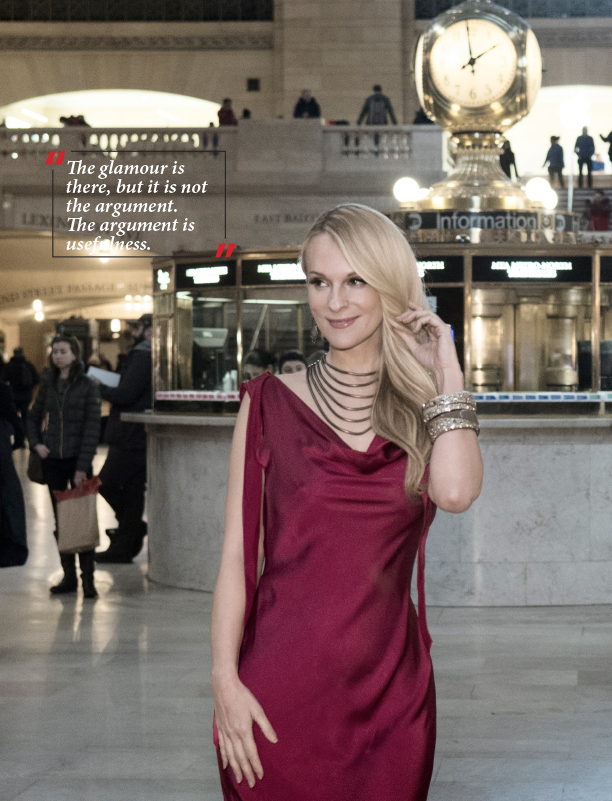
The glamour is there, but it is not the argument. The argument is usefulness.
Her philanthropic and cultural commitments add another dimension. Her connection to the Vanderbilt Museum and Planetarium, Eagle’s Nest, the historic Long Island estate of William K. Vanderbilt II, reflects a personal and symbolic tie to preservation, education and public engagement. Like her work with students in Miami and her programming in Chicago, it underscores a larger philosophy: history is most meaningful when it becomes accessible.
There is a Town & Country quality to the arc, of course: an American family name, a woman at the center of a new chapter, the elegance of heritage meeting the velocity of contemporary life. But Vanderbilt Costin’s story is compelling because it does not rest on society-page shorthand. The glamour is there, but it is not the argument. The argument is usefulness.
In the coming months, her speaking engagements are likely to continue positioning her as a voice in conversations about family enterprise, women’s leadership, creative entrepreneurship and legacy stewardship.
These are not separate themes in her world. They are interconnected.
For Vanderbilt Costin, the next chapter of the Vanderbilt name will not be written solely in archives, ballrooms or biographies. It will be written in classrooms, cultural forums, business conversations, philanthropic partnerships and creative collaborations. She is not asking what the Vanderbilt name once meant. She is asking what it can do now.